
The healing power of art: The MMFA’s Sharing the Museum program
Art can connect people, spark conversations and heal when other things can’t, shared Louise Giroux, educational programs officer at the Montreal Museum of Fine Arts (MMFA). The impact of art on well-being has always been the inspiration behind the Sharing the Museum art participation initiative for local community groups since its launch in 1999. From breaking social isolation to learning new skills, thousands have benefited from the program, expanding from troubled youth and seniors to those with Alzheimer’s and special needs.
According to the program’s mission statement, “[Sharing the Museum]...has earned worldwide recognition for its cultural mediation model aimed at promoting accessibility and inclusion for diverse publics.” This approach is defined by Montreal non-profit Culture Pour Tous as a means for “building new connections between people and culture … ranging from audience-development activities to participatory and community art.”
Originally called “Bridging Art and the Community,” the museum aims to reach vulnerable individuals with guided tours and art workshops. According to the American Alliance of Museums, the MMFA was inspired by British cultural
organizations that had discovered the key role that engaging in art could have on personal development and social cohesion.
Sharing the Museum’s objective is three-fold; “to awaken curiosity, learn about art, and spend time together,” as stated on the website.
Giroux has held different positions at the MMFA since joining 28 years ago but shared how “the wellness program has al-ways been a passion of mine. The activities are great to solicit the senses, engage – or just be.”
As a connoisseur of art, she recognizes the impact it has had for many. Regular visits build a community for those without one and are often the only reason they leave the house. “Art can play many roles,” she said in an interview with Inspirations. “It can be calming, unsettling, triggering yet healing.”
According to the MMFA site, the museum is the first in Canada to dedicate a physical space to art and health programs and one of the first to employ a full-time art therapist. It has partnered with over 400 non-profits and community groups, working with seniors, people struggling with eating disorders or dementia, as well as individuals with disabilities.
Among these is Up House, a self-described “strength-based, restorative community of people” dealing with mental health challenges. “I have often found art and culture to be a universal language to bring people together,” said its director Lisa Bellevue. “Regularly going to the museum has really contributed to our members’ journeys and recovery.”
Autisme sans limites (ASL) is another par-ticipating organization. Visits are enhanced with the museum’s Sensational Supplies Packs, which are filled with textured objects, noise-cancelling headphones and fidget toys (see the article in Spring 2022, p. 39). Facilitators also visually explain the process of visiting a museum to reduce the anxiety of the unknown. These accommodations help clients “build more adaptability and to be able to better navigate new environments and experiences,” said ASL intervention worker Inès Anane. “They feel welcomed as they are.”
Through demonstrating the power of connection fostered by art particiaption, Giroux hopes more museums will replicate this model so that others can equally benefit.
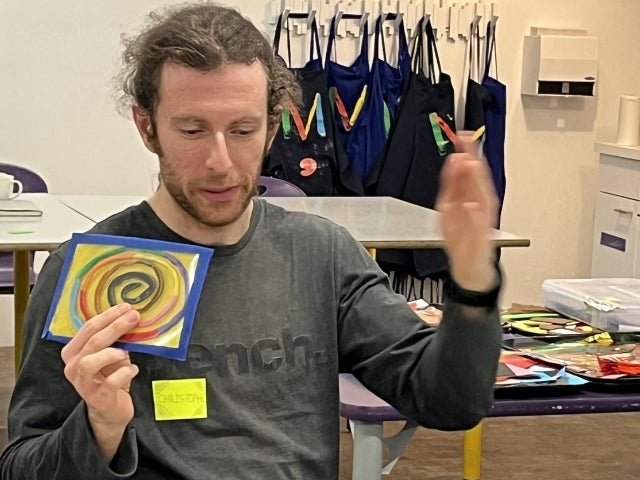
The Art Hive inclusive art studio is open twice a week.
Info: www.mbam.qc.ca/en/education/sharing-the-museum