
Pilot project aims to improve police engagement with autistic people
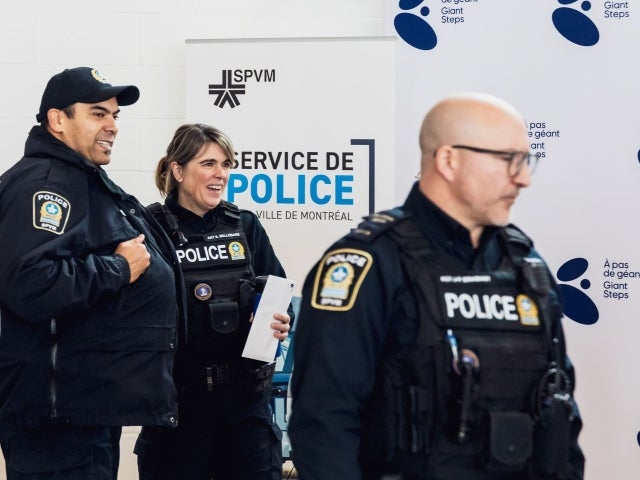
A new partnership between Giant Steps and the Service de police de la Ville de Montréal (SPVM) aims to improve interactions between officers and autistic people.
Giant Steps had already been working with the Montreal police for a few years, educating new recruits during a one-day immersion course when the idea for AutSecours arose. Police officers said they wanted more information about an individual so they could be better prepared before engaging with them. Autistic adults and their families who were consulted on the program agreed it would be helpful.
The pilot project, which launched in January, invites parents of autistic children or autistic adults to fill out a form providing as much personal information as they want. The information is then uploaded to the SPVM database. Officers automatically access the information if the person involved in the intervention is in their system, providing them the information to tailor their reaction.
For now, the project is being tested solely with students from Giant Steps. “We want to go slow and make sure we’ve thought about everything, crossed all our t’s and dotted our i’s and make sure everything is working well before the police put it at large for Montreal,” said Marla Cable, assistant director of Giant Steps’ Resource and Training Centre.
Cable explained that Giant Steps, which provides primary and secondary education to more than 180 autistic children and adults, had already been working with the police for a few years, training 90 new recruits annually on how to better interact with autistic people. This year, new police recruits met with Giant Steps adult education students, some of whom have already had interactions with police.
“It’s been really interesting...because [the students] are able to reflect on what happened, why, what worked well and what didn’t and that’s really eye-opening for police officers,” she said. Some of the things the students brought up were that they needed more time and space to process information from police and not being touched by officers.
“A lot of the strategies we use with autistic people are strategies we could use with the general population because we all get stressed and anxious [during interactions] with police officers,” she said.
Autistic people and parents were part of the conversation in developing AutSecours. “I try to make sure I’m not only representing the type of student that’s here at Giant Steps but to honour the whole spectrum…,” Cable said.